
Full Body Exercises
These compound, full body exercises engage multiple muscle groups simultaneously, promoting efficient calorie burning and overall strength development. There is a wide range of common and unique exercises, including squats, push-ups, lunges, and planks which will build coordination, increase overall strength & mobility, and are a great option for a full body workout when you’re pressed for time.
Search Full Body Exercises

Ab Pullovers offer an effective method to simultaneously strengthen multiple muscle groups, engaging the back, chest, abs, glutes, and hamstrings.

Introducing a variation of the classic Bird Dog exercise amplifies the challenge to the core's balance, strength, and stability. This version intensifies the engagement of glutes, abs, shoulders, and back muscles, surpassing the demands of the original Bird Dog exercise.

The transition from Child's Pose to Cobra Pose offers an excellent method for replenishing spinal mobility while stretching both the back and front of the body. Emphasizing a slow, gentle, and controlled execution is key to benefiting from this movement.

This variation of the Bent-over Row merges elements of a Stiff-Legged Deadlift with the traditional row, creating a compound, full-body exercise. It effectively targets and strengthens the back, hamstrings, calves, glutes, arms, and core muscles. You can perform this exercise using a barbell, bands, or dumbbells for versatility.

The Kettlebell Snatch presents a demanding and challenging exercise engaging the entire trunk, hips, and shoulders, relying heavily on proper technique. Beginning with a lighter weight is advisable to ensure comfort and mastery before progressing to heavier loads.

The Kettlebell Snatch is a high-level exercise focusing on power development, fortifying the glutes and hamstrings, and testing shoulder stability.

The Static Beast Kickbacks, an advanced variation, target the arms, glutes, shoulders, and core muscles. This exercise simultaneously challenges both trunk and hip stability and strength.

The Single Leg Deadlift stands as a timeless exercise that enhances balance while fortifying the glutes, hamstrings, calves, and feet. This versatile exercise can be executed with or without added weight for variation.

The Plank Walkouts To Squats serve as an excellent mobility drill while also challenging the strength of the core, shoulders, hips, legs, and arms.

Lunges stand as a foundational lower body exercise that seamlessly pairs with other movements, like a bicep curl, for a comprehensive full-body workout. Engaging the legs, glutes, arms, and core, this exercise elevates overall stability.

Single Leg Deadlifts With Rows represent a timeless exercise for enhancing hip extension and refining single-leg balance. This comprehensive move effectively strengthens the back, shoulders, biceps, core, hamstrings, and glutes, offering a holistic workout in a single exercise.

Thrusters stand as an exceptional compound exercise, combining a front squat with a shoulder press, engaging the entire body simultaneously. This exercise targets the shoulders, quads, core, and doubles up as a fantastic cardio workout.

The Turkish Get-Up stands as an intricate full-body exercise enhancing coordination, strength, and stability across multiple muscles and joints, notably targeting the shoulders, core, and legs.(For a beginner-friendly alternative, consider exploring Half Turkish Get Ups tutorial in our exercise library)

If you encounter balance issues or excessive lower back strain during a Single Leg Deadlift, this variation offers support by placing your rear foot against a wall. This added stability aids in engaging your core more effectively, ensuring a safer execution of the exercise.
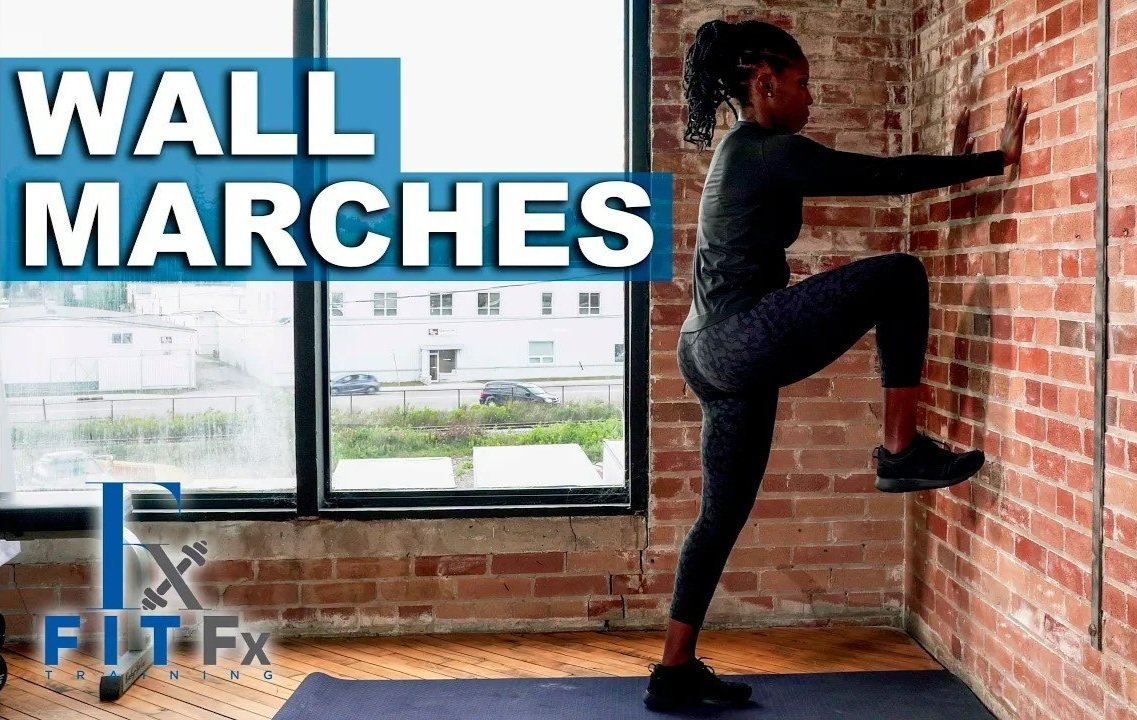
Wall Marches serve as an excellent method to fortify your core and individual leg strength utilizing only a wall. This exercise also aids in enhancing trunk stability and posture.
Latest Blog Posts

Lower back pain has the ability to wreak absolute havoc on your day to day life. Fixing your lower back pain depends on the mechanism of injury. Is it disc related? Do you have nerve pain? Is it just from sitting a lot? Depending on how you answered the above questions, your approach to reaching pain-free movement is going to differ. I’ve included possible reasons for your lower back pain and what exactly you should do about it.

